


Cartilage piercings have a quiet pull. One small addition to your ear, then another, until you have built something that feels considered and entirely your own. If you are thinking about your first cartilage piercing, or adding to a stack you already love, this guide covers everything worth knowing.
Shop cartilage earrings

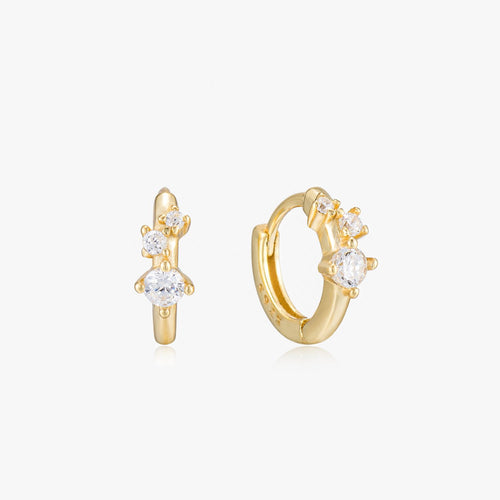
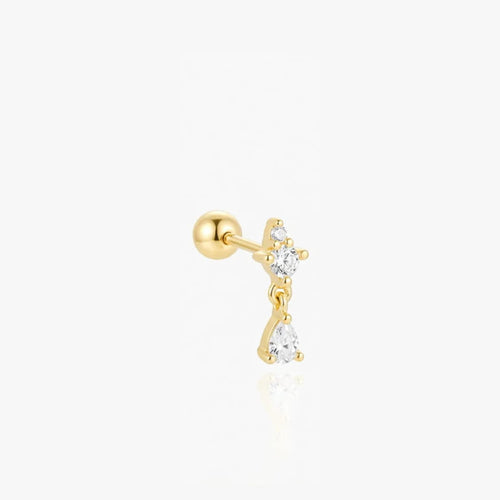
We will walk through the main types of cartilage piercings, how much each tends to hurt, how long they take to heal, and how to choose jewellery that suits both the placement and your skin. Cartilage sits in the firmer upper part of your ear, above the soft lobe. It heals more slowly and asks for a little more patience. The reward is a curated ear you build with intention, one piece at a time. Here is how to approach it calmly and well.

What Is a Cartilage Piercing?
A cartilage piercing is any ear piercing through the firmer tissue above your soft lobe. While a lobe piercing passes through flesh, cartilage piercings pass through the stiffer, structured part of the ear. This is why they behave differently. They take longer to heal, they can feel a little more tender at first, and they ask for steady aftercare. The upside is range. Cartilage gives you many placements to choose from, which is what makes building a personal, layered ear so rewarding. The term covers everything from a simple helix to a statement conch.

The Main Types of Cartilage Piercings
Each placement has its own character, comfort level and ideal jewellery. Here are the most common cartilage piercings, from the easiest starting points to the more advanced spots.
Helix
The helix is the most popular cartilage piercing and a lovely place to begin. It sits along the upper outer rim of your ear, the curved edge that runs from the top down toward the back. Because this area is relatively thin, it tends to be one of the gentler cartilage piercings. Healing usually takes three to six months. Small hoops and flat back studs both suit it, and it is the natural anchor for a building stack. Explore our helix earrings for pieces made to sit neatly on the upper ear.

Forward Helix
The forward helix sits on the same upper rim, but at the front of your ear, closer to your face and just above the tragus. It is a small, flat spot, so delicate studs work best here. Many people wear two or three forward helix piercings in a row for a soft, clustered look. Pain is usually mild to moderate, with healing around three to six months.

Tragus
The tragus is the small flap of cartilage just in front of your ear canal. It is a subtle, eye-catching spot that frames the face. Studs and small clickers sit best here, since larger pieces can get in the way. The area is firm, so expect a quick, sharp pinch, with healing around three to six months. See our tragus earrings for low-profile pieces designed for this delicate placement.

Anti-Tragus
The anti-tragus sits opposite the tragus, on the small ridge of cartilage just above your earlobe. It is less common, which makes it a quiet way to stand out. Because the area curves, curved barbells and small hoops tend to fit best. It can feel more intense than a lobe piercing and heals over several months. Once healed, it pairs beautifully in a stack with lobe and helix piece.

Flat
The flat piercing sits on the broad, even panel of cartilage in the upper ear, the smooth section between the outer rim and the inner ridges. It takes its name from this flat surface, which also makes it one of the most versatile placements to style. Because the area is level rather than curved, flat back studs are the natural choice and sit beautifully flush against the ear. Pain is usually moderate, with healing around four to six months. It is a lovely spot for a small accent within a stack. Browse our cartilage earrings for studs suited to this placement.

Conch
The conch is the large, cupped area in the centre of your ear, named after the seashell it resembles. There are two versions, inner and outer, and both make a striking statement. A snug stud sits flat against the conch, while a large hoop can wrap around the outer ear. Healing tends to be longer here, often six to twelve months. Discover our conch earrings for pieces that suit this central, expressive placement.

Daith
The daith sits in the innermost fold of cartilage, where the ridge curves just above the ear canal. It is tucked away, so it reads as a subtle detail rather than a bold one. Small hoops and clickers are the usual choice, following the natural curve. It can feel more intense to pierce and heals over six to nine months.

Rook
The rook sits in the fold of cartilage above the daith, on the inner ridge of the upper ear. Because it passes through a thicker fold, it is often considered one of the more intense cartilage piercings. Curved barbells are the classic fit, hugging the ridge neatly. Healing usually takes six to nine months, sometimes longer. It adds beautiful depth to a curated ear once settled.

Snug
The snug, runs along the inner ridge of cartilage that sits parallel to your outer rim. It is one of the more advanced placements and not suited to every ear, so a piercer will check your anatomy first. A short curved barbell is the standard fit. It is among the more intense piercings and can take eight to twelve months to heal.

Industrial
The industrial is a bold, architectural piercing, two holes across the upper ear connected by a single straight barbell. It makes a strong statement and suits those who love a defined look. Because it passes through two points of cartilage, it heals more slowly, often taking up to a year. Keeping the bar still during healing matters.

How Much Do Cartilage Piercings Hurt?
Pain is personal, so it helps to set expectations gently rather than chase a precise number. Most cartilage piercings feel like a brief, sharp pinch followed by a dull warmth that fades within minutes. Thinner placements like the helix and forward helix tend to feel milder. Deeper folds like the rook, daith and snug usually feel more intense, simply because the cartilage there is thicker. A skilled piercer works quickly, which makes a real difference. If it is your first cartilage piercing, starting somewhere gentle can build your confidence for the rest. See our piercing chart for pain ratings.
Healing and Aftercare
Cartilage heals more slowly than the lobe because it has less blood flow. Most placements settle within three to twelve months, though deeper ones can take longer. Patience genuinely matters here. To care for a new piercing, clean it twice a day with a sterile saline spray, front and back. Rinse gently in the shower and pat dry with a clean tissue.
A few simple habits help it heal well:
-
Avoid touching the piercing with unwashed hands.
-
Skip swimming pools and hot tubs while it heals.
-
Try not to sleep directly on a new piercing.
-
Be gentle with hairstyles, hats and headphones that press on the area.
Some swelling, light crusting and a clear fluid are all normal in the early weeks. Leave the jewellery in place until the piercing has fully healed, and have your piercer check it before any change.
Choosing Jewellery for a Cartilage Piercing
The right jewellery depends on one thing first, whether your piercing is still healing or fully healed. Getting this distinction right protects your ear and keeps everything comfortable.
While It Is Healing
For a fresh piercing, wear the jewellery your piercer fits and follow their guidance closely. Most professionals use implant-grade titanium, which is light, body-safe and well suited to sensitive, healing tissue. This is not the moment for fashion pieces or frequent swaps. Leave the original jewellery in place for the full healing window, even when you are tempted to change it. Doing so gives your piercing the calm, stable conditions it needs to settle well.
Once It Is Healed
Once your piercing has fully healed, your options open up. This is when you can start choosing pieces that reflect your style and complete your stack. Our earrings are made with hypoallergenic materials and quality gold plating, designed for comfortable everyday wear on healed ears. If your skin tends to react, our sterling silver earrings are a gentle choice worth exploring. Take your time here. A healed cartilage piercing is a small canvas you can dress and redress for years.

Why Flat Back Studs Work So Well for Cartilage
Flat back studs are a favourite for cartilage, and for good reason. Instead of a traditional butterfly back, they have a smooth, flat disc that sits against the back of your ear. This makes them far more comfortable to sleep on, with nothing to dig in or catch on hair and pillows. They also sit flush and neat, which suits the close placement of cartilage piercings. For everyday comfort and a clean finish, explore our stud earrings.
Styling a Cartilage Stack with Intention
Here is the part we love most. A cartilage stack is not a checklist to rush through, it is something you build slowly and deliberately. Start with one piece you adore, then add placements that balance it over time. Mix scale for interest, perhaps a small stud beside a slim hoop, and decide whether you want to keep one metal throughout or blend gold and silver tones. Let your ear shape guide you rather than copying someone else's exactly. The most beautiful stacks feel personal because they were built that way. For a gentle method, see our guide on how to stack earrings, and browse pieces made to layer in our ear stacking collection.
Frequently Asked Questions
How long do cartilage piercings take to heal?
Most heal in three to twelve months, far longer than the six to eight weeks a lobe needs. Conch and rook piercings can sit at the longer end. Give it time and resist changing the jewellery early.
Are cartilage piercings more painful than lobe piercings?
Generally yes, because cartilage is firmer than the soft lobe. Most people describe a brief sharp pinch rather than lasting pain. Placements like the helix tend to feel milder, while the rook and daith can feel more intense.
When can I change my cartilage piercing?
Wait until it has fully healed, which is usually a few months at minimum. Changing too early can irritate the piercing and slow healing. When unsure, ask your piercer to check it first.
What gauge are cartilage piercings?
Most are pierced at 16G, though some placements use 14G or 18G. Your piercer will choose based on the spot and the jewellery. Matching the gauge matters when you buy new pieces later.
Can I wear sterling silver in a cartilage piercing?
Once your piercing has fully healed, yes. While it is still healing, wear the implant-grade jewellery your piercer fits. If your skin is sensitive, our sterling silver range is a gentle choice for healed ears.
Do cartilage piercings close up if I take the jewellery out?
They can, especially in the first year or before full healing. Even older cartilage piercings can shrink or close faster than lobe piercings. If you love a piercing, keep jewellery in it.
Can I sleep on a cartilage piercing?
It is best to avoid sleeping on a fresh one, as pressure can cause irritation and small bumps. A travel pillow with a hole, or simply sleeping on the other side, helps. Flat back studs make healing-side sleep far more comfortable.
What is the least painful cartilage piercing to start with?
The helix is often the gentlest first cartilage piercing. It sits on the upper outer rim, which is thinner and quick to pierce. It also styles beautifully on its own or as the start of a stack.
When you are ready to dress a healed piercing, explore our cartilage earrings made for considered, everyday wear.


