


Planning your next ear piercing? This guide covers everything you need. Whether you are thinking about a second lobe, your first helix, or a full curated ear, the ear piercings chart below maps every placement with pain levels, healing times, and the best jewellery for each spot.
Shop cartilage earrings

In This Guide
Use it as a reference before your appointment, or as a planning tool for building your ear stack over time.

The Ear Piercings Chart
Here is a complete reference across the most common ear piercing placements. Pain levels are out of 10 and represent an average. Healing times are ranges — actual healing depends on aftercare, your body, and the jewellery you wear.
| Piercing | Location | Pain | Healing time | Tissue | Best jewellery |
|---|---|---|---|---|---|
| Standard lobe | Centre of the earlobe | 1/10 | 6–8 weeks | Fleshy | Studs, huggies, hoops |
| Upper lobe | Above the standard lobe | 2/10 | 6–10 weeks | Fleshy | Studs, small huggies |
| Helix | Upper outer rim of the ear | 4/10 | 6–9 months | Cartilage | Small hoops, flatback studs |
| Forward helix | Outer rim curving toward the head | 5/10 | 6–9 months | Cartilage | Flatback studs, tiny hoops |
| Auricle | Middle of the outer rim | 4/10 | 6–9 months | Cartilage | Small hoops, studs |
| Tragus | Small flap over ear canal | 5/10 | 4–8 months | Thick cartilage | Flatback studs, tiny hoops |
| Daith | Innermost fold above ear canal | 6/10 | 6–9 months | Thick cartilage | Curved hoops, clickers |
| Rook | Upper inner ridge above the daith | 7/10 | 6–10 months | Thick cartilage | Curved barbells, small hoops |
| Conch | Large inner bowl of the ear | 6/10 | 6–9 months | Flat cartilage | Studs, small hoops, ear cuffs |
| Flat / scapha | Flat area between helix and bowl | 4/10 | 6–9 months | Cartilage | Flatback studs |
| Industrial | Bar connecting two helix points | 7/10 | 9–12 months | Cartilage (x2) | Industrial barbells |
| Snug | Inner ridge between inner/outer | 9/10 | 12–18 months | Thick folded cartilage | Curved barbells |
Popular Ear Piercing Types
Standard lobe
- Pain level: 1/10
- Healing time: 6–8 weeks
The classic first piercing. Placed in the centre of the earlobe. Basic aftercare is all it needs. Works with almost every earring style — studs, hoops, huggies, drops. This is the foundation of most ear stacks.
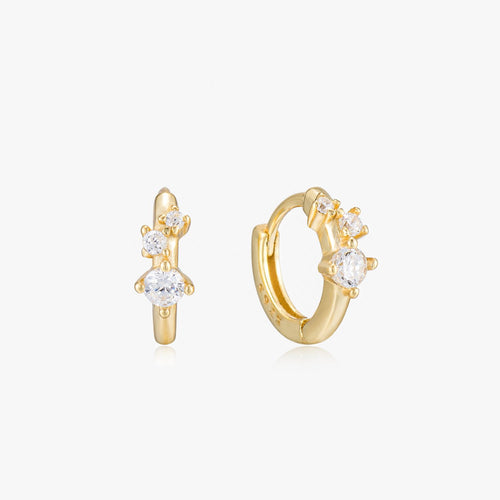
If you are just starting out, a small stud earring or huggie is a good first piece. Lightweight, smooth, and easy on a healing piercing.

Upper lobe
- Pain level: 2/10
- Healing time: 6–10 weeks
Placed directly above the standard lobe, before the cartilage starts. Slightly more tender than the standard lobe but still one of the easier placements. This is where most people put their second piercing.
Stacking a huggie at the standard lobe with a small stud above it is one of the most common and flattering combinations for a beginner stack.

Stacked lobes
- Pain level: 2/10
- Healing time: 6–10 weeks per piercing
Two or three lobe piercings in a neat line. A popular foundation for a curated ear. You can add placements gradually over time rather than getting them all at once. Most piercers recommend waiting until one piercing is fully healed before adding the next.
See our ear stacking ideas guide for combination inspiration.
Helix
- Pain level: 4/10
- Healing time: 6–9 months
The most common cartilage piercing. Placed anywhere along the upper outer rim of the ear. Most people feel a quick, sharp pinch. It is a versatile placement that works well solo or as part of a stack.

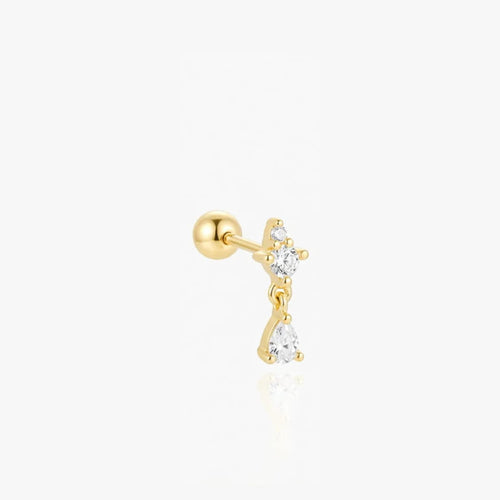
Small hoops and flatback studs are the most popular choices for a helix. For a helix piercing, a flatback sits flush and is less likely to catch on hair during healing.
Forward helix
- Pain level: 5/10
- Healing time: 6–9 months
Placed on the outer rim where it curves forward to meet the head, just above the tragus. Slightly more tender than a standard helix. A delicate, understated placement.

Auricle
- Pain level: 4/10
- Healing time: 6–9 months
The auricle sits in the middle of the outer rim, between the helix above and the lobe below. A flexible spot. It works on its own, or as a link between other placements when you build a stack. Small hoops and studs both suit it well.
Tragus
- Pain level: 5/10
- Healing time: 4–8 months
Tragus is the small flap of cartilage that covers the entrance to the ear canal. You may hear a crunch as it is pierced. One of the subtler cartilage piercings. Not visible from the front unless you are looking for it.

Daith
- Pain level: 6/10
- Healing time: 6–9 months
The innermost fold of cartilage just above the ear canal. It is often decorated with a curved clicker hoop, which suits the anatomy of the placement well. Sometimes associated with migraine relief, though evidence for this is anecdotal.

Rook
- Pain level: 7/10
- Healing time: 6–10 months
The upper inner ridge of cartilage above the daith. One of the more demanding cartilage placements. Less common than a helix or tragus, which makes it a good option if you want something a little more individual.

Conch
- Pain level: 6/10
- Healing time: 6–9 months
Conch is the large flat bowl at the centre of the ear. Works well with a stud or a small hoop, and is also a placement that suits an ear cuff if you want the look without the commitment.

See our ear cuffs for a no-piercing version of the conch style.
Flat
- Pain level: 4/10
- Healing time: 6–9 months
The flat area of cartilage between the outer rim and the inner bowl. A less common but increasingly popular placement for a small flatback stud.

Industrial
- Pain level: 7/10
- Healing time: 9–12 months
An industrial is two helix piercings joined by a single straight barbell across the top of the ear. Bold and architectural. It takes longer to settle than most placements, as the bar runs through two points of cartilage at once. Keep the bar still and clean while it heals.

Snug
- Pain level: 9/10
- Healing time: 12–18 months
The snug runs along the inner ridge of cartilage, parallel to the outer rim. It is the most demanding ear placement to get and to heal, passing through a thick, folded ridge of cartilage. Small and subtle once healed. Not one to rush. A curved barbell sits best here.
A Note on Jewellery for New and Healing Piercings
The material you wear during healing matters more than most people realise. A new piercing is an open wound, and the wrong metal can cause an allergic reaction, slow healing, or lead to ongoing irritation even after the piercing has closed.
Look for earrings made with hypoallergenic materials and quality plating. Avoid anything with nickel as a base, as nickel is the most common cause of metal allergies.
At LYANG & CO., our earrings are made with hypoallergenic materials and finished with quality 18k gold plating. If you have particularly sensitive skin or newly pierced ears, our sterling silver earrings collection is a good starting point.
For cartilage piercings specifically, flatback studs are generally recommended by piercers. They sit flush against the skin, reduce movement, and lower the risk of irritation during healing.
Browse our flatback earrings collection for healing-friendly options.

How to Use This Chart to Plan Your Ear Stack
The ear piercings chart above is more than a reference. It is a planning tool.
When building a curated ear, the most important thing to consider is healing windows. If you get multiple piercings at once, each one needs equal attention during healing. Most piercers recommend getting one or two at a time, then waiting until they are fully healed before adding more.
A good starting plan: standard lobe first, then upper lobe once it is healed, then a helix when you are ready to move into cartilage. From there, you can add a forward helix, a tragus, or an ear cuff for the look of a conch without the piercing.
Our how to stack earrings guide covers the combinations in more detail, and the earring stacks collection has ready-made combinations if you would prefer a starting point.
Frequently Asked Questions
How many types of ear piercings are there?
There are more than ten common ear piercing types, split across two groups. Lobe placements like the standard and upper lobe are the softest and quickest to heal. Cartilage placements like the helix, tragus, conch, daith and rook sit higher up the ear and take longer. The chart above maps every type with its pain level and healing time.
What is the least painful ear piercing?
The standard lobe piercing is the least painful, rated around a 1 out of 10. It is soft tissue with good blood flow, which means faster healing and minimal discomfort. The upper lobe is a close second at around 2 out of 10.
What is the most painful ear piercing?
The snug is the most painful, rated around a 9 out of 10. It passes through a thick, folded ridge of cartilage, which makes it demanding to get and to heal. On the pain scale, lobe piercings sit lowest at 1 to 2, most cartilage placements fall between 4 and 7, and the snug sits at the top.
How long does a helix piercing take to heal?
A helix piercing typically takes 6 to 9 months to fully heal. Cartilage has poor blood flow compared to lobe tissue, which slows the healing process. Good aftercare — saline spray twice a day, no touching with unwashed hands — makes a significant difference.
Can I get multiple ear piercings at once?
Yes, but there are practical limits. Most piercers recommend no more than two or three at a time, as each piercing requires consistent aftercare during healing. Getting too many at once also puts more strain on your immune system. Spacing them out gives each piercing a better chance of healing cleanly.
What is the best jewellery for a new piercing?
Flatback studs are generally the most piercer-recommended option for new piercings, especially in cartilage. They sit flush, minimise movement, and reduce the risk of irritation. Look for hypoallergenic materials and quality plating. If you have sensitive skin, explore the sterling silver range as a starting point.
What ear piercings are best for sensitive skin?
The placement matters less than the jewellery you put in it. For sensitive skin, choose earrings made with hypoallergenic materials and avoid nickel. Our nickel-free earrings collection and sterling silver earrings are both good options for sensitive ears.
How do I plan an ear stack?
Start simple: one or two lobe piercings first. Then consider one cartilage placement, such as a helix, once your lobes are healed. Build from there at your own pace, allowing each piercing to heal fully before adding another. Want to see it before you commit? Try our ear stack builder to design your look, then explore our ear stacking guide for styling tips.
Explore our flatback earrings, huggie earrings, and helix earrings — designed for everyday wear and built to last.


