


A curated ear is not one earring. It is five or six pieces of metal sitting in your skin for twelve hours a day.
If you have sensitive ears, that changes the maths. Material choice does not just matter more in a stack. It multiplies. Every extra piercing you fill is another post through your skin and another back pressing against it.
The good news is that stacking with sensitive ears is completely doable. You just need to build it deliberately. Here is how.
Why Material Matters More in a Stack
One earring is one point of contact. A five-piece stack is five posts, five backs, and a lot more surface area against your skin, worn all day.
There is also a second problem. If one piece in your stack is made from a metal your skin does not like, your whole ear reacts. And because everything is reacting at once, you have no idea which piece caused it.
This is the one weak link problem, and it is why so many people conclude they simply cannot wear stacks. Usually they can. They just have one bad earring in the mix. Our guide to why your ears get itchy with earrings covers how to work out what is causing a reaction.
Shop hypoallergenic earrings
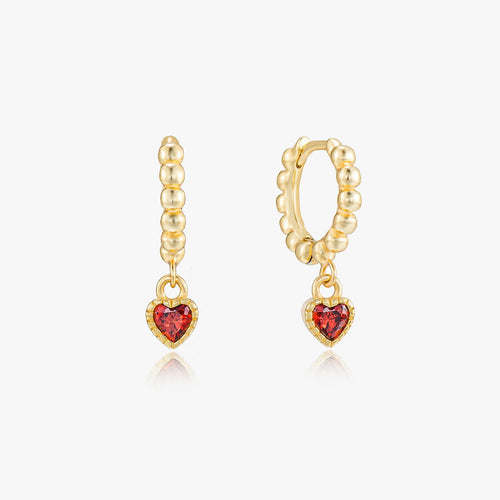


The Rule Nobody Tells You: Check the Post, Not the Front
Here is the most useful thing in this article.
The decorative front of an earring is not what touches your piercing. The post is. So is the back. Those two components pass through and press against the most sensitive skin you have, and they are the ones almost nobody checks.
A beautiful gold-plated front over a brass post is still a brass post. The plating on the front is cosmetic. It tells you nothing about what is going through your ear.
Before you buy anything for your stack, ask one question: what is the post made of? If a brand cannot answer that, or if the listing just says hypoallergenic with no metal named, that is your answer.

Choose Your Base Metals
For a stack, you want every piece built on a base metal you trust.
Titanium
The safest option. No nickel at all, biocompatible, and very light, which matters when you are wearing several pieces at once. Best for cartilage placements and for anyone whose ears react easily.
925 sterling silver
Reliable for healed lobes and the base of most quality hypoallergenic jewellery. Nickel-free when made properly. Not suitable for a piercing that is still healing.
Solid gold, 14k and above
A safe choice when the alloy is nickel-free. The higher the karat, the less alloy metal against your skin. Worth knowing: white gold often uses nickel to achieve its colour, so check before you buy. Solid gold is also the most expensive option here, which makes it a better fit for one or two feature pieces in a stack than for the whole thing.
Surgical steel
Affordable and durable, and fine for most people with healed piercings. Two things to check.
The grade. Surgical is a marketing word, not a standard. Look for 316L, 316LVM, or ASTM F138. Steel also contains nickel, usually 8 to 14%, bound tightly in the alloy. Most people never react to it. A genuine nickel allergy might.
The weight. Steel is heavier than titanium or silver. In one earring that is fine. In a stack of five, the weight pulls on your piercings and causes friction irritation, which itches even without an allergy.
What to avoid
-
Anything sold as alloy, metal, or base metal with no grade
-
Gold plating over brass, which is the most common cause of reactions in cheap jewellery
-
Mystery backs from old sets
For the full breakdown of how the main metals compare, see our titanium vs sterling silver vs surgical steel guide.

Build Your Stack, One Piece at a Time
Start with your lobes
Your lobe is the easiest, most forgiving placement. Start with a stud or a huggie in a metal you know works for you. That is your anchor.
Add one piece at a time
This is the method, and it is worth the patience.
Add a single new earring to your stack. Wear it for a week. If your ears stay calm, add the next one. If they react, you know exactly which piece is responsible, and you have only one earring to replace instead of five.
Building a stack all at once feels good for about a day. If it goes wrong, you are back at the beginning with no information.
Use flatbacks for cartilage
Cartilage placements sit tighter against the skin and take longer to settle. Flatback earrings sit flush, do not catch on hair, and remove the pressure point that a butterfly back creates. They also solve the mystery-back problem entirely, because the back is part of the same piece.
Consider an ear cuff
The most underrated piece in any sensitive-ear stack. An ear cuff needs no piercing, has no post, and nothing passes through your skin. Zero reaction risk. If you want a fuller ear without adding another piercing, this is the easiest way to do it.
Five Stacking Mistakes That Cause Reactions
-
Mixing one mystery piece into an otherwise safe stack. It only takes one.
-
Reusing old butterfly backs from unrelated sets. Safe post, unsafe back, same result.
-
Overloading the ear with weight. Heavy pieces pull on the piercing and cause friction damage, which itches even without an allergy.
-
Adding a new piercing to the stack before it has healed. A healing piercing needs implant-grade titanium and nothing else.
-
Never cleaning the stack. Product buildup and grime on the posts irritate skin over time, and a stack has a lot of posts.

Building Your Stack With LYANG & CO.
Our earrings are made with hypoallergenic materials, 925 sterling silver and titanium, and are nickel-free. Gold pieces are finished with 18k gold plating and silver-toned pieces with rhodium plating.
Every piece in the range is designed to be worn together, so you can build a full stack without worrying that one earring will let the rest down.
Start with our hypoallergenic earrings if your ears are reactive. Browse earring stacks for ready-made combinations, or use the ear stack builder to design your own.
Frequently Asked Questions
Can I build an ear stack with sensitive ears?
Yes. Sensitive ears do not rule out stacking. They just mean every piece needs to be made from a material you trust. Build the stack one earring at a time so that if something does react, you know exactly which piece caused it.
What is the best metal for an ear stack?
Titanium is the safest, especially for cartilage placements, and it is light, which matters when you are wearing several pieces. Quality 925 sterling silver works well for healed lobes. Avoid anything with an unnamed base metal, and avoid gold plating over brass.
Why does my ear stack make my ears itch?
The most likely cause is one piece in the stack made from a metal your skin reacts to. It only takes one. Other causes include reused earring backs from unrelated sets, too much weight pulling on the piercings, and product buildup on the posts. Remove the stack, let your ears settle, then reintroduce pieces one at a time.
Can I mix metals in a hypoallergenic ear stack?
Yes. Mixing gold and silver is purely a styling choice and has no effect on how your skin reacts, as long as every piece is nickel-free and built on a base metal you trust.
Do I need to remove my ear stack at night?
Not necessarily, if your pieces are flatback or low profile and made from safe materials. Butterfly backs and dangling styles are more likely to press into your ear overnight and cause irritation. If your ears are sore in the morning, that is the first thing to change.
Can I Mix Gold and Silver in a Hypoallergenic Stack?
Yes. Mixing metals is a styling decision, not a safety one.
As long as every piece in your stack is nickel-free and built on a base metal you trust, gold and silver can sit next to each other with no problem at all. Mixed metals are one of the most current looks in ear styling and there is no reason sensitive ears should miss out on it.


