


A single piercing can be stylish and considered. It depends entirely on what you put in it and what you add around it.
Three things turn a single piercing into a stacked ear. A cuff, which needs no piercing. A multi-band cuff, which reads as several earrings at once. And an ear jacket, which gives you two visible pieces from one hole.
Here is how to build a stacked, curated ear with a single lobe piercing.
Shop all earrings
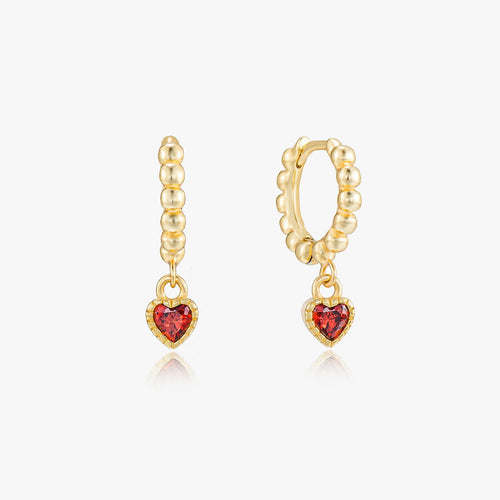


Start by Making Your One Earring Count
One earring with enough presence can hold the whole look on its own, and it will look more considered than three forgettable pieces would.
What gives an earring presence:
-
Silhouette. A chunky or puffy hoop reads as deliberate in a way a thin one does not.
-
Texture. Twisted, rope, or hammered finishes catch the light and hold attention.
-
Scale. Slightly larger than you would normally pick. If you are wearing one earring, it can afford to be seen.
-
Two-tone. A piece that combines gold and silver does the work of a mixed-metal stack in a single earring.
If you buy nothing else from this article, upgrade your everyday hoop. Browse hoop earrings and hoop drop earrings.

Ear Cuffs: The Piece That Changes Everything
An ear cuff gives you a second piece on your ear without a second piercing.
What are ear cuffs
An ear cuff is a small band that wraps around the edge of your ear. It grips gently by pressure rather than passing through your skin. You slide it on, pinch it lightly to adjust, and it stays put.
No needle, no healing, no commitment. If you decide you do not like it, you take it off.
Where to wear one
-
Upper helix. The most common placement. Adds height to the ear and reads clearly as a stacked look.
-
Mid-cartilage. Sits closer to your existing lobe earring, so the two pieces feel connected.
-
Conch, along the inner rim. A less obvious placement that looks like a piercing most people do not have.
Because a cuff moves, you can try all three and keep the one you like.

Do they hurt?
No, and if one does, it is too tight. A cuff should feel secure but barely noticeable. If yours pinches, gently widen the opening or slide it to a thinner section of cartilage where the grip is softer.
Browse our ear cuffs to see the option.
The Faux Stack: Multi-Band Cuffs
This is the trick worth knowing.
Some ear cuffs have two or three parallel bands rather than one. Worn on the ear, those bands read as separate earrings, so a single cuff can look like two or three piercings you do not have.
Paired with your lobe earring, a triple-band cuff gives you the visual weight of a four-piece stack from one piercing and one accessory. It is the fastest way to get a fully stacked look with a single hole.
Ear Jackets and Front-Backs
The other overlooked option. An ear jacket sits in one piercing but has two visible parts: a stud at the front and a decorative element that sits behind or below the lobe.
Front-back earrings work the same way. One piercing, two elements, and from the front it looks like considerably more than a single stud.
They suit a lobe piercing particularly well, and they pair neatly with a cuff higher up for a full-looking ear from one hole.

Five Combinations for One Piercing
The minimal
-
Lobe: a small textured huggie
-
Upper helix: a thin plain cuff
Two pieces, quiet and everyday. The easiest place to start and the hardest to get wrong.
The faux double
-
Lobe: a medium hoop
-
Mid-cartilage: a double or triple-band cuff
Reads as three or four earrings. Nobody counts your piercings.
The high-low
-
Lobe: a drop earring or larger hoop
-
Upper helix: a small delicate cuff
Weight at the bottom, something quiet at the top. Follows the same graduation principle as a multi-piercing stack.
The mixed metal
-
Lobe: a gold huggie
-
Helix: a silver cuff
Mixing metals is one of the easiest ways to make two pieces look intentional. Our guide to mixing metals in an ear stack covers how to do it well.
The going-out
-
Lobe: a statement drop or ear jacket
-
Helix: a sculptural or CZ cuff
Two bold pieces and nothing else. Restraint is what stops it looking busy.

Getting the Fit Right
The most common reason people give up on cuffs is fit, and it is usually fixable.
-
Snug, not tight. You should feel it holding, not gripping.
-
Adjust the opening gently. Widen it if it pinches, narrow it if it slides. Small movements only.
-
Move to thinner cartilage. Higher up the rim is usually thinner and more comfortable for longer wear.
-
Build up wearing time. Start with a few hours if your ears are not used to it.
-
Take it off at night. A cuff pressing into your ear against a pillow is the fastest way to decide you hate cuffs.
Use a Cuff to Trial a Piercing
Here is a use for cuffs that almost nobody mentions.
If you are thinking about getting a helix or conch piercing but are not sure it suits you, wear a cuff in that spot for a few weeks first. You get to see how it looks with your hair up and down, how it sits with your face, and whether you actually reach for it.
A piercing is a months-long healing commitment. A cuff is a reversible preview. If you do decide to go ahead, our ear piercing chart covers pain levels and healing times for every placement.
The Sensitive Skin Advantage
An ear cuff has no post. Nothing passes through your skin, and there is no piercing for a metal to sit inside for twelve hours a day. That makes it the lowest-risk piece of jewellery you can put on your ear. Explore our hypoallergenic earrings for more options for sensitive ears.
Frequently Asked Questions
Can you have an ear stack with only one piercing?
Yes. Ear cuffs wrap around the ear without a piercing, so a single lobe piercing plus one or two cuffs gives you a fully stacked look. Multi-band cuffs go further, reading as two or three earrings from a single accessory.
Do ear cuffs need a piercing?
No. Ear cuffs grip the cartilage by gentle pressure. You slide one on, pinch it lightly to adjust the fit, and it stays in place. Nothing passes through your skin.
Do ear cuffs hurt?
They should not. A well-fitted cuff feels secure but barely noticeable. If yours pinches, widen the opening slightly or move it to a thinner part of your ear rim. Pain always means the fit is wrong, not that cuffs are not for you.
Will an ear cuff fall off?
Not if it is fitted correctly. The cuff should hold firmly enough that a light touch does not shift it. If yours slides, narrow the opening a little. If it still moves, try a slightly thicker section of cartilage.
How can I make one piercing look like more?
Three ways. Wear a multi-band cuff, which reads as several earrings at once. Wear an ear jacket or front-back earring, which gives you two visible elements from one hole. Or combine both with a statement lobe piece for a full-looking ear.
What is the best earring for a single piercing?
Something with presence. A chunky or textured hoop, a two-tone huggie, or a drop earring with movement. If you are only wearing one earring, it can afford to be slightly larger and more detailed than you would normally choose.


