


Mixing gold and silver works. The rule against it retired years ago and nobody has missed it.
What people actually want to know is different: how do you mix metals so it looks like a decision rather than an accident?
Here is the whole problem in one sentence. A single silver earring stranded at the edge of a gold stack looks like you ran out of gold ones. The same earring placed centrally, or echoed once elsewhere, looks like you meant it.
That is genuinely most of it. An accent metal needs something telling the eye it was chosen, whether that is repetition or placement. The eight tips below are all variations on that idea.
Shop all earrings
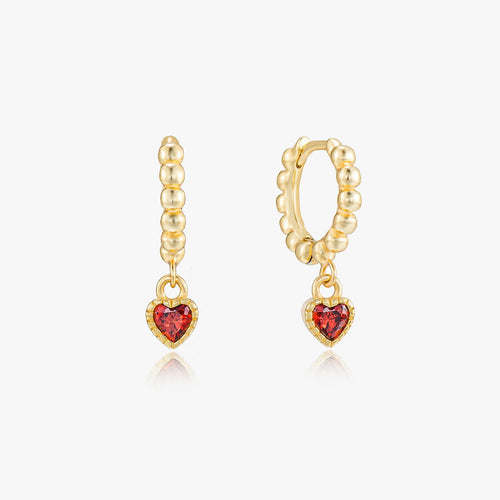


1. Pick a Dominant Metal
Do not aim for an even split. A stack that is half gold and half silver has no centre of gravity, and the two tones end up competing rather than complementing.
Aim for roughly seventy percent one metal and thirty percent the other. In a six-piece stack that means four gold and two silver. In a smaller stack of three or four, a single accent is enough, as long as you place it well. The dominant metal sets the tone and the accent adds the interest.
2. Support Your Accent Piece
An accent metal needs something telling the eye it was chosen. There are two ways to do that, and which one you use depends on the size of your stack.
In a larger stack of five or six pieces, use two of your accent metal and space them apart. The repetition does the work, and the eye reads a pattern rather than an outlier.
In a smaller stack of three or four, one accent is enough. Place it centrally rather than at the top or bottom edge, where a lone piece can look stranded rather than styled.
3. Keep Your Other Variables Steady
This is the tip most people skip, and it is the one that makes the difference.
Metal is a big variable. If you are mixing it, keep the others consistent. Similar sizes, similar shapes, similar textures. A gold huggie beside a silver huggie reads as a deliberate contrast. A chunky gold twisted hoop beside a tiny silver pearl stud reads as two unrelated earrings. Our guide to ear stacking mistakes covers why varying too much at once is the most common styling error.
4. Choose a Pattern: Alternate or Block
There are two clean ways to arrange two metals in one ear, and both work.
Alternate up the ear. Gold at the first lobe, silver at the second, gold at the third. The metals sit directly next to each other, which makes the mix impossible to read as an accident. This works best when the pieces are similar in size and style, because the alternating pattern is doing all the work.
Block by placement. Keep your lobes one metal and your cartilage the other. Gold at the lobes, silver at the helix and conch, or the reverse. The eye reads two zones rather than a pattern, which makes it a calmer version of the same idea. It looks particularly considered when your cartilage pieces are small.
5. Bridge the Metals With a Stone
The easiest technique here and the least known.
A clear CZ or a pearl reads as neither gold nor silver. It sits between the two tones and softens the transition, which makes the whole mix feel gentler. Place a stone piece between your gold and silver pieces and the contrast stops being abrupt.
Pearls do the same job with a little more warmth. Browse stud earrings for pieces that work as bridges.
6. Keep Your Tones Consistent Within Each Metal
One detail that quietly ruins mixed stacks.
If you are wearing three gold pieces, they should all be the same shade of gold. An 18k gold plated piece next to a rose gold piece next to a pale yellow gold piece is three tones, not one, and the stack looks muddy rather than mixed.
The same applies to silver. Sterling silver and rhodium-plated silver read slightly differently in some lights, and they sit best together when the finish is consistent.
Mix two metals deliberately. Do not accidentally end up with four.
7. Match the Shape When Mixing Across Both Ears
You can also mix between ears rather than within one.
The approach that works: keep the shape identical and change only the metal. A gold star stud in one ear and a silver star stud in the other looks intentional, because the repeated shape tells the eye it was planned.
Change both the shape and the metal and you have two unrelated earrings. Change only the metal and you have a styling choice.
8. Start With a Two-Tone Piece
If you are nervous about mixing at all, buy one earring that already contains both metals.
A two-tone hoop, or a gold piece set with a silver-toned stone, does the mixing for you. It also gives every other metal in your stack permission to be there, because the combination has already been made by the design.
It is the lowest-risk way in, and a good place to start if you own mostly one metal and are not ready to commit.
Three Combinations to Try
The easy start
-
First lobe: gold huggie
-
Second lobe: silver stud
-
Third lobe: gold stud
Three pieces, one accent, similar scale throughout. Note where the silver sits: centrally, with gold on either side. That placement is what makes a single accent read as chosen rather than left over.
The blocked ear
-
First and second lobe: gold hoop and gold huggie
-
Helix: small silver flatback
Metals separated by zone rather than alternating. Calm, and it suits anyone who finds alternating patterns too busy.
The bridged stack
-
First lobe: gold hoop
-
Second lobe: CZ or pearl stud
-
Third lobe: silver huggie
The stone sits between the two metals and softens the change. The most elegant of the three, and the one that looks the most considered. Try it in our ear stack builder before you buy.
Frequently Asked Questions
Can you mix gold and silver earrings?
Yes. Mixing metals is one of the most current approaches to ear styling and the old rule against it is long gone. The key is making it look deliberate: choose one dominant metal, use the other as an accent, and keep your sizes and shapes consistent so the metal is the only thing varying.
How do I mix metals without it looking like a mistake?
Give the eye a reason to see it as deliberate. In a larger stack, use two of your accent metal and space them apart so the repetition reads as a pattern. In a stack of three or four, one accent is enough, but place it centrally rather than at the top or bottom edge where a lone piece can look stranded.
What is the 70/30 rule for mixing metals?
Choose one metal for roughly seventy percent of your stack and the other for thirty percent. In a four-piece stack that is three of one and one of the other. An even split has no centre of gravity and the two tones end up competing.
Should I match my earrings to my necklace and rings?
Not necessarily, but repeating the mix elsewhere helps. If you are wearing gold and silver in your ear, having both metals somewhere else on your body makes the whole look read as intentional rather than isolated to one place.
Do stones help when mixing metals?
Yes, and it is an underused trick. Clear CZ and pearls read as neither gold nor silver, so a stone piece placed between your two metals softens the transition. It is the easiest way to make a mixed stack feel gentle rather than abrupt.
Can I mix metals if I have sensitive ears?
Yes. Metal colour and skin reaction are separate issues. What matters is the base metal and whether it is nickel-free, not whether the finish is gold or silver. Our hypoallergenic earrings come in both tones and are designed to be worn together.
Does mixing metals suit every skin tone?
Gold is often said to suit warm undertones and silver cool ones, but mixing sidesteps the question entirely. Wearing both means one of them will always work with your skin, which is part of why mixed stacks are so wearable.


